|
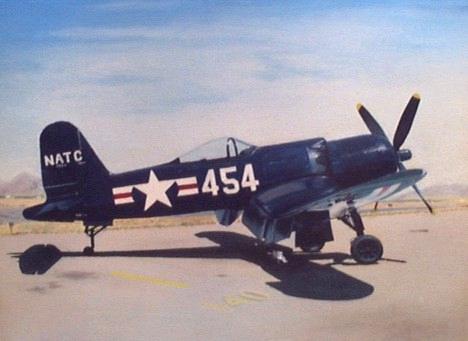
Possibly the hottest warplane of W.W. II, the Goodyear F2G Super Corsair, a refinement of the fabulous F4U, was designed to counter the totally unexpected advent of the kamikazes, or suicide planes, whose vicious attacks on the U.S. fleet were taking a mounting toll.
Kamikaze, which means divine wind, was Japan's ultimate weapon in their efforts to stave off the inevitable invasion of their home islands. Many of these brave but misguided pilots were mere boys with less than six hours' training. With a shot of sake, a brief prayer and a salute, these dedicated young aviators, bent on giving the Emperor their last full measure of devotion, flew their explosive-laden planes into the largest American ships they could find, aircraft carriers being the most prized target. The devastation they wrought was truly dramatic: some of the greatest naval loses of the war were attributed to their suicidal assaults.
Enter the "Super"
Goodyear modified the basic F4U Corsair airframe in the hopes of creating the ultimate Kamikaze killer. The fuselage had to be stretched to accommodate a huge new engine, a Pratt & Whitney R-4360 radial. This monster powerplant, with supercharging and water injection, produced an astonishing 3,500 HP and boosted the fighter's top speed to well over 500 mph.
Don Armstrong, the plane's test pilot, who once engaged Charles Lindbergh in a mock dogfight, with Lindbergh flying a P38 while Armstrong flew a Corsair, boasted that the F2G could take off in less than 300 feet and be rocketing through 5,000 feet of altitude before he'd passed the end of the runway. It was his favorite fighter.
Alas, the war ended before the mighty Super Corsair saw combat After the war, several were surplused to the racing crowd. Only two flying examples are known to exist.
On December 13, 2004, reader Kevin Ryan informed us that Bob Odegaard (owner of Cook Cleland’s #57) is currently restoring a third to flying status. Thanks, Kevin!--Ed.
We’re sorry we didn’t post this earlier, but Bob Odegaard was tragically killed in his # 74 F2G while practicing his airshow routine at Barnes County Airport, in Valley City, North Dakota. Our condolences not only on losing a great pilot but a rare and great aircraft. Read more here at FLYING Magazine.--7/31/2013--Ed.
* Krazy Kamikaze Killer is an oil on canvas copy of a beautiful photograph, which, if memory serves, was in Air Classics magazine. I loved it so much I had to have a larger shot in oil for permanency. I wish I could remember who the photographer was, for I would surely give him proper credit for his outstanding work. Carlton W. Austin
Check out how it hangs, here...
|